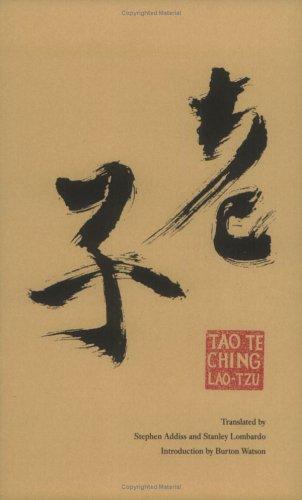
Tao Te Ching
★ Editor's choiceLao Tzu, circa 6th century BCE. Eighty-one chapters, less than 5,000 Chinese characters, the entire foundation of Daoist thought. Reading it is not optional for anyone interested in consciousness, leadership, non-coercion, or how to live in alignment with what is rather than against it. Translations matter — Stephen Mitchell's is the poetic standard, Red Pine's the scholarly reference, D.C. Lau's the classical Cambridge edition. Read one a year for life and the book teaches a different lesson each pass.
Clean · Verifiable · Durable · Ancient lineage
Research ↗
⇄ commission link

Seven hundred Sanskrit verses inside the Mahabharata, the central scriptural text of the Vedic tradition. The dialogue between Arjuna and Krishna on the eve of the great battle — duty, action, devotion, liberation. Eknath Easwaran's translation is the warm modern entry; Stephen Mitchell's is the poetic; the Gambhirananda / Ramakrishna Math edition is the scholarly with Shankara's classical commentary. The book Gandhi carried, the book Oppenheimer quoted, the book millions still read daily.
Clean · Verifiable · Durable · Ancient lineage
⇄ commission link

The most-read book in human history and the textual scaffold of Western civilization. Whether read as scripture, mythology, literature, philosophy, or law, the depth is the same. For a literal translation that preserves rhythm and texture: the Robert Alter translation of the Hebrew Bible (one of the great scholarly achievements of the last century). For the New Testament alongside, the New Revised Standard Version. For continuous family reading, the King James — irreplaceable for its English-language influence even where its scholarship has been superseded.
Clean · Verifiable · Durable · Ancient lineage
⇄ commission link

Pre-Christian Jewish apocalyptic literature, fragments of which were found among the Dead Sea Scrolls. Excluded from the Hebrew canon and most Christian canons (the Ethiopian Orthodox Church keeps it), which is exactly why it matters — the cosmology of fallen angels, Watchers, giants, and pre-Flood revelation that the canonical texts only allude to. The R.H. Charles 1917 translation is the scholarly standard; the Nickelsburg / VanderKam two-volume Hermeneia commentary is the deeper read.
Clean · Verifiable · Durable · Ancient lineage
⇄ commission link
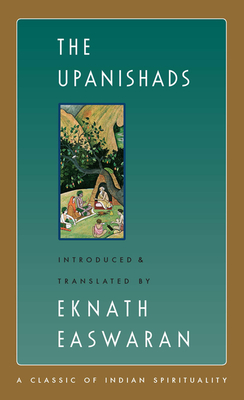
The philosophical layer of the Vedas — composed between 800 and 200 BCE, the foundational texts of Hindu thought and the source from which Buddhism, Jainism, and most of the later Indian traditions branched. Tat tvam asi — that thou art — is here. The non-dual recognition the entire eastern contemplative tradition has been unpacking for three thousand years. Eknath Easwaran's translation is the readable; the Olivelle Oxford edition is the scholarly.
Clean · Verifiable · Durable · Ancient lineage
⇄ commission link